RRE Final
Britney Abreu
04/22/2023
RE Final
Engl 21002
Female Gender Roles
 For many years including today’s society, women were considered the “backbone” of their family while the man was considered the “breadwinner.” This wasn’t just a thing in the US but all around the world. Before 1920, women weren’t allowed to vote or work, women were forced to stand back and take care of other families and their at home responsibilities. Sexism against women in their workplace has been a lasting issue for many years and continues to have a significant impact on women today. In the text Homeplace by Bell Hooks the main idea was how women had specific task to live up to. As an example, their work, taking care of their family, and what they must put aside to keep their family happy and safe while also facing racism because of the color of their skin.
Sexism is often a form of discrimination or prejudice based on a person’s sex or gender. Women have been discriminated against in many areas of society, including in the workplace, education, and politics. Hooks was an African American woman whose mother and grandmother had to experience white supremacy firsthand. This text emphasizes on the task African American women had to achieve with the addition of their jobs. This essay shows the morals they had for their families and others, while they experience white supremacy in their day-to-day life. She would describe what they experienced and struggled with while keeping up with their own lives. This included a safe place away from racism that is their home. While reading this essay she also brought out the idea of women’s natural jobs of being “caretaker.”
Sexism has often been a negative thing that happens at any workplace. The task of a female can 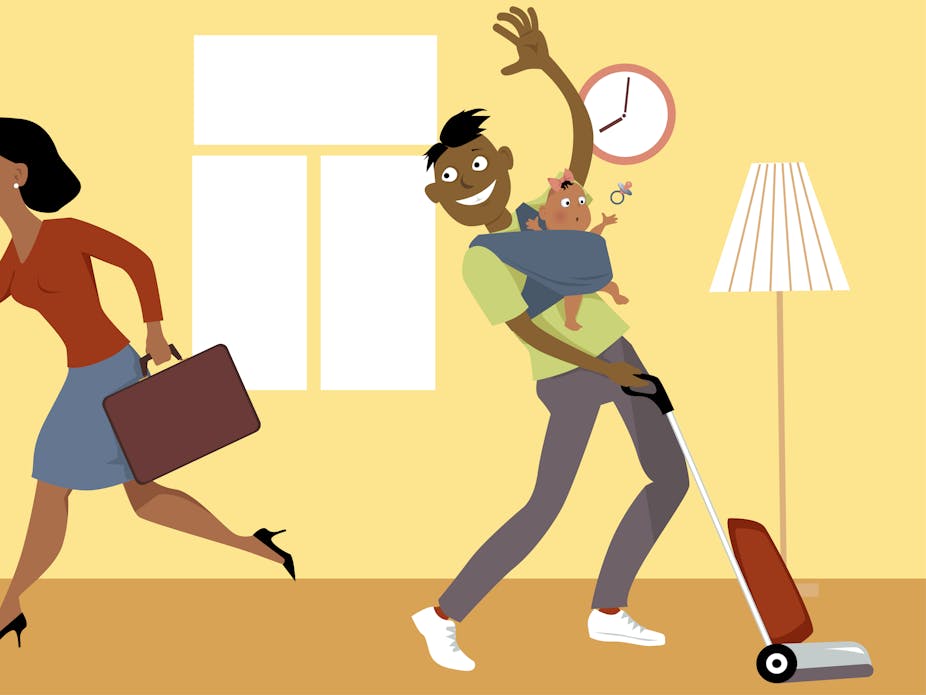 be a lot to handle at times due to tasks at work and at home. In the 20th century feminist movements was a social movement aimed at achieving gender equality for women. In “Homeplace” we see in the inequality not only African Americans were facing but also what women were facing. In the text by Hooks, she states in page 386, “Douglass’s work is important, for he is historically identified as sympathetic to the struggle for women rights. All too often his critique of male domination, such as it was, did not include recognition of the particular circumstances of black women in relation to black men and families.” Women’s struggles were seen by all and spoken on. Although they were limited to what they could do. Throughout the 20th century, women have fought for a wide range of rights and opportunities, like reproductive rights, access to education, employment, and especially equal pay. From forming protests, marches, and many other forms of direct action to raise awareness. In the article Women in the Civil Rights Movement they state, “Many women played important roles in the Civil Rights Movement, from leading local civil rights organizations to serving as lawyers on school segregation lawsuits. Their efforts to lead the movement were often overshadowed by men, who still get more attention and credit for its successes in popular historical narratives and commemorations”. Women had to fight to get the respect they deserve and freedom. From the words of Hooks females had the tasks of creating a home safe environment. In her side African American women had to construct domestic households and nurturance of their brutal harsh reality of racism. Their everyday lives consisted of doing tasks for others while being treated unhuman like going back and taking care of their own families too.
It is not surprising that race can make your workplace harder when you’re already experiencing sexism. As an African American woman during this period, you had to live up for mistreatment everywhere you’ll go. Leaving your children behind to work for another family, especially a family home that can often be a dangerous place since you are forced to do everything they say or face the consequences, this doesn’t only affect you and your mental health but also your kids. In the essay “Homeplace” by Hooks (page 387) it states the following, “in our family, I remember the immense anxiety we felt as children when mama would leave our home, our segregated community, to work as a maid in the homes of the white folks.” We can see how the action of racism doesn’t only affect the person going through it but also their kids watching from a far. Children are often looked passed on in this situation and we talk about the adults and their experiences but not what the kids feel when they see their parents going away. In the text Experiences of Racism Among African Americans Parent and the Mental Health of Their Preschool-Aged Children” they state, “Only negative social climate, especially fear of victimization, was associated with child symptoms of depression and anxiety.” In this article the main topic was how racism from their environment impacted the children. This article connects to Homeplace because it brings up the anxiety children go through when experiencing and witnessing racism. Children witnessing their parents go through racism can have a significant impact on their emotional and psychological well-being. Seeing their parents being treated unfairly because of their race can be distressing and confusing for children, particularly if they don’t fully understand what is happening.
We can only imagine the tiredness these families experienced, waking up early to go to work all day to return home and take care of their own family. They had to keep up their duties at work and at home. Hooks talks about how her mother left her responsibility of taking care of her home and family even if she was extremely tired. In page 387, Hooks writes, “looking back as an adult woman, I think of the effort it must have taken for her to transcend her own tiredness (and who knows what assaults or wounds to her spirit had to be put aside so that she could give something to her own).” Hooks could see how tired her own mother was but still how hard her mother worked to ensure her own family was settled. Her mother put her tiredness aside and took care of her responsibilities. In the article Role Strain in African American Women the Efficacy of Support Networks by Edith A. Lewis they state, “they beat the stigma attached to their ethnic status, as well as that of being female, in many cases. While attempting to modify or execute the responsibilities attached to their roles, they are also influenced by the often “caste-like” restrictions prescribed to them in their ethnic status.” Many African American women have had to take on multiple roles and responsibilities, such as being a caregiver for their children and elderly family members, working outside the home, and managing household tasks. These demands can be physically and emotionally exhausting, leaving little time or energy for self-care and personal fulfillment.
Women often face sexism in the workplace, which can take many different forms. Some common examples include Unequal Pay, Gender Stereotyping, and Sexual Harassment. Women had the specific job to take care homes and become a caregiver. Many African Americans worked as caregivers, providing assistance and support to individuals who were unable to care for themselves. These jobs were often low-paying and involved long hours away from their own families.
Work Citation:
1. Lewis, E. A. (1989, December). Role Strain in African-American Women: The Efficacy of
Support Networks. Jstor. https://www.jstor.org/stable/26784697
2.Women in the civil rights movement : articles and essays : civil rights history project : digital collections : library of Congress. The Library of Congress. (n.d.). https://www.loc.gov/collections/civil-rights-history-project/articles-and-essays/women-in- the-civil-rights-movement/
3. Caughy, M. O., O’Campo, P. J., & Muntaner, C. (2004, December). Experiences of racism among African American parents and the mental health of their preschool-aged children. American journal of public health.https://www.ncbi.nlm.nih.gov/pmc/articles/PMC1448601/
4. Hooks, B. (n.d.). Homeplace. Are.na. https://www.are.na/block/10469390

